
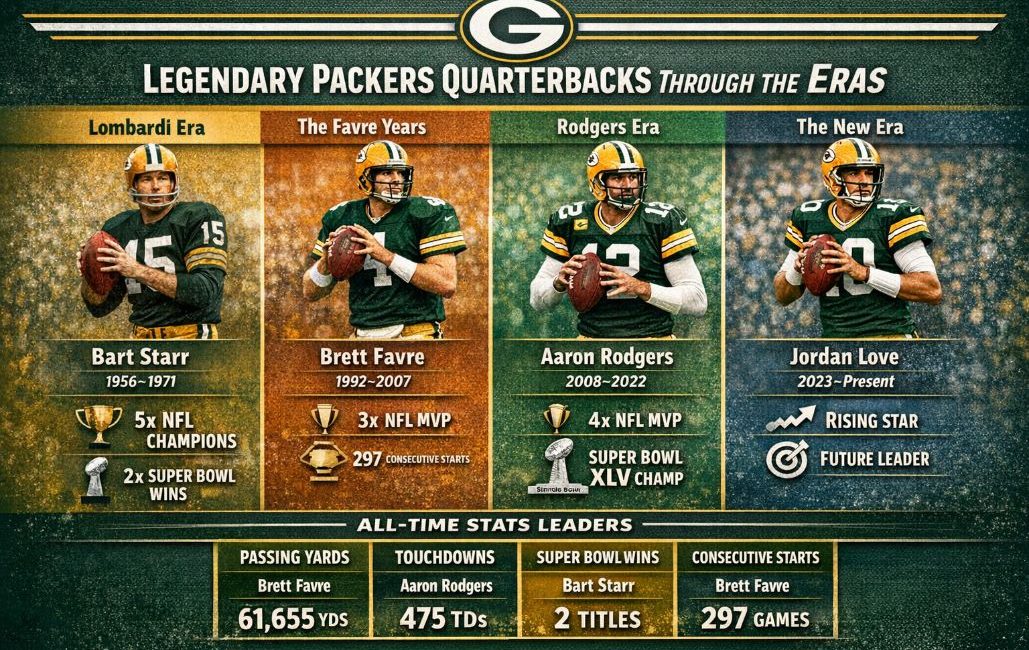
Green Bay Packers Quarterback History: From Starr to Rodgers and Beyond
The Green Bay Packers quarterback history is one of the richest, most continuous threads in NFL lore. Few franchises can match the depth of signal-caller excellence that has flowed through Lambeau Field, and even fewer boast the kind of generational stability the Packers have enjoyed since the 1950s. From Bart Starr’s clutch leadership during the Lombardi dynasty to Brett Favre’s gunslinger resurgence and Aaron Rodgers’s pinpoint precision, Packers quarterbacks have shaped football itself. Now, with Jordan Love at the helm, the next chapter is underway.
This article takes you on a journey through every era of Packers QB play — the evolution of the position, the defining moments and championships, and how each era’s starter influenced team identity and NFL history. Whether you’re a longtime fan or just diving into Titletown’s heartbeat, this deep dive covers the legends, the records, the controversies, and the quarterback culture that makes Green Bay unique.
Early Packers and the Birth of the Quarterback Role
Before the forward pass became a staple of the NFL offense, the Packers — like all early teams — relied largely on running attacks and multi-role backs. In those early decades, the quarterback wasn’t yet the strategic centerpiece we know today.
Quarterbacks in the NFL’s Formative Years
In the 1920s and 1930s, Packers quarterbacks sometimes doubled as running backs and defensive players. Passing rules were restrictive and less frequent, and the role was often shared. Standouts like Arnie Herber were early pioneers of throw-first football, proving the forward pass could be more than just a trick play.
Herber, for instance, became one of the first quarterbacks to eclipse 1,000 passing yards — a watershed moment for offenses in that era. But stability at the position was rare; teams frequently shuffled players through the QB spot due to injuries, roster limits, or strategic shifts.
Post-War Changes and Growing Importance
By the 1940s and into the early 1950s, rule changes and evolving offensive schemes pushed the quarterback role toward prominence. The Packers, like others, began to appreciate the value of a true field general — someone who could lead the offense, make pre-snap reads, and push the ball downfield.
Bart Starr and the Lombardi Dynasty (1956–1971)
Bart Starr remains one of the most iconic figures in Packers quarterback history and NFL lore. Drafted in the 17th round in 1956 and initially a backup, Starr seized the starting job in Vince Lombardi’s first season as head coach.
The Quiet Leader Emerges
Starr wasn’t a flashy athlete, but he was a cerebral field general — precise, calm under pressure, and a master of Lombardi’s demanding offense. From 1961 onward, the Packers were perennial championship contenders, and Starr was at the center.
He led the Packers to five NFL championships in the 1960s, including victories in Super Bowls I and II, and earned NFL MVP honors in 1966. Starr’s completion percentage and efficient decision-making were hallmarks of his play, even if his numbers paled in comparison to later eras’ pass-heavy attacks.
Memorable Moments and Legacy
Perhaps Starr’s most legendary game was the “Ice Bowl” — the 1967 NFL Championship at Lambeau Field in brutally cold conditions. Starr orchestrated a late drive capped by a quarterback sneak into the end zone to seal the victory against the Dallas Cowboys, solidifying his legacy as a clutch performer.
Off the field, Starr epitomized leadership and professionalism. He guided an offense that valued ball control and precision, and his leadership laid the foundation for how quarterbacks would be evaluated in future decades.
The Lean Years and QB Search (1970s–Mid-1980s)
After Starr’s retirement in 1971, the Packers entered a period of inconsistency at quarterback. Without the structure of a Lombardi-like figure or a franchise cornerstone, Green Bay experimented with a variety of signal-callers.
Struggles to Find Stability
The decade featured numerous starts from different QBs, but few delivered long-term success. It wasn’t until Lynn Dickey emerged in the late 1970s that the Packers enjoyed relative stability at quarterback. Dickey started over 100 games and led the team through the early 1980s, even leading the league in passing yards in 1983 — a franchise record that stood for nearly three decades.
The Majik Man: Don Majkowski
Another notable QB from this era was Don “Majik Man” Majkowski, whose playmaking ability brought excitement to Green Bay in the late 1980s. He posted impressive stats and near MVP-level performance in 1989, though injuries and inconsistency limited his ultimate impact.
Despite flashes of brilliance, this period underscored the challenge of finding the next superstar after Starr.
Brett Favre: Iron Man and Franchise Rebirth (1992–2007)
By the early 1990s, the Packers were desperate for stability at quarterback. Enter Brett Favre — acquired via trade and soon entrenched as the starter. Favre’s arrival marked the beginning of one of the most exciting eras in franchise history.
From Uncertainty to Stardom
Favre’s gunslinger mentality — fearless, passionate, and often improvisational — energized Lambeau Field. He started what would become an NFL record 321 consecutive games as a quarterback, including playoffs, and brought a swagger that lifted the franchise.
Favre’s prime was highlighted by three straight NFL MVP awards (1995–1997) — the first player in history to achieve the feat. In Super Bowl XXXI, he led the Packers to a championship, snapping a long title drought for the franchise.
Numbers That Defined an Era
Favre retired with Packers franchise records for passing yards and touchdowns and was among the league leaders in multiple categories during his tenure. His durability, competitive fire, and memorable comeback drives made him a fan favorite and a key figure in NFL history.
Favre’s legacy is complex — filled with brilliance, grit, and no shortage of controversy — but his impact on the Packers and the league is undeniable.
Aaron Rodgers: Precision, Consistency, Greatness (2008–2022)
When Brett Favre’s time in Green Bay ended, the Packers turned to Aaron Rodgers — a first-round pick who had watched and learned as Favre’s understudy. Rodgers’s rise was swift and unmistakable.
A New Kind of Elite QB
Rodgers took over in 2008 and soon showcased a remarkably different style — efficient, precise, and cerebral. In 2010, he led the Packers to a Super Bowl XLV victory, earning the MVP of the game and cementing his status as an elite quarterback.
Over his Packers career, Rodgers amassed four NFL MVP awards, demonstrating remarkable consistency at the highest level. He became known for his touchdown-to-interception ratio, leading the league in multiple efficiency categories, and setting records for passer rating and lowest interception percentage.
Rodgers vs. Favre: Different Icons
While comparisons between Rodgers and Favre are common among fans, their styles couldn’t be more distinct. Favre thrived on heart, improvisation, and sheer toughness, while Rodgers leaned into precision, anticipation, and calculated aggression. Both brought championships and MVP honors, but their legacies reflect different paths to greatness.
By the time Rodgers departed the Packers in 2022, he had etched his name near the top of the franchise’s record books — trailing only Favre in total passing yards and often surpassing him in efficiency.
Transition and the New Era: Jordan Love (2023–Present)
With Rodgers traded in 2023, the Packers turned to Jordan Love, the quarterback they drafted in 2020. Love had served as Rodgers’s backup before finally stepping into the starting role.
Early Success and Growth
Love’s early years as Packers starter showed promise and growth. In his first start, he threw for 245 yards and three touchdowns in a win over Chicago, becoming only the third quarterback to start Week 1 for the Packers since 1993 (after Favre and Rodgers).
As of 2025, Love continued to climb Packers’ all-time lists, ranking among franchise leaders in passing yards and touchdowns — an impressive feat so early in his career.
Breaking New Ground
Love’s breakout performances — including tying Favre’s franchise record of 20 consecutive completions in a game — suggest he may be forging his own legacy while carrying forward the Packers’ long tradition of premier quarterback play.
Comparing Eras: Evolution of the Packers QB
One of the most fascinating aspects of Packers quarterback history is how the role has evolved:
– Bart Starr’s era focused on ball control and strategic play-calling.
– Favre’s era embodied toughness, durability, and explosive play.
– Rodgers’s era emphasized efficiency and elite decision-making.
– Love’s era blends athleticism with modern offensive innovation.
Each era reflects broader NFL trends — from run-first offense to quarterback-centric schemes — while maintaining a Packers tradition of stability and excellence at the position.
All-Time Packers QB Rankings and Fan Debates
Packers fans love debating who is the greatest of all time: Starr, Favre, Rodgers, or someday Love. Lists vary, but a common consensus puts these three at the top for their impact, longevity, and championship pedigree.
Advanced metrics, historical context, and team success all factor into these debates — and every era has its defenders and detractors. Starr’s championships are unmatched; Favre’s durability and excitement are legendary; Rodgers’s efficiency is historic.
Key Records by Packers Quarterbacks
Green Bay’s franchise passing leaders reflect its rich QB history:
– Brett Favre: Most passing yards (61,655) and touchdowns (442) for Packers.
– Aaron Rodgers: Franchise leader in touchdowns (475) and second in yards (59,055).
– Bart Starr: Legendary early passer with 24,718 yards and five championships.
Other historical leaders include Lynn Dickey, Tobin Rote, and more — showing that even outside the elite trio, Packers QBs contributed to the franchise’s legacy.
Conclusion
The Green Bay Packers quarterback history is more than a list of names — it’s a thread that connects generations of fans to the soul of the franchise. From the grit and discipline of Bart Starr, through Brett Favre’s fearless run, to Aaron Rodgers’s calculated brilliance, and now to Jordan Love’s early promise, Lambeau Field has seen a remarkable lineage of quarterbacks.
Each era brought its own flavor: strategic leadership, iron-man toughness, precision artistry, and now a blend of athleticism and innovation. As Love continues his journey, he carries forward a legacy of stable quarterback play unmatched in many NFL markets. For fans, analysts, and historians alike, the Packers’ signal-caller story is one of the most compelling in all of sports — rooted in tradition, defined by excellence, and always evolving.
Frequently Asked Questions
Who are the most famous Green Bay Packers quarterbacks?
The most celebrated QBs in Packers history are Bart Starr, Brett Favre, Aaron Rodgers, and current starter Jordan Love.
Which Packers quarterback has the most passing yards?
Brett Favre holds the record for most passing yards in Packers history.
How many Super Bowls did Bart Starr win?
Starr led the Packers to two Super Bowl victories (I and II) as part of five NFL championships.
When did Aaron Rodgers become the Packers’ starter?
Rodgers took over as starting quarterback in 2008 after Bret Favre’s departure.
Who is the Packers’ quarterback now?
Jordan Love has been the Packers’ starting quarterback since 2023.
We Want Your Thoughts!
Did this article give you a fresh perspective on Packers quarterback history? Who you think deserves the title of greatest Packers QB of all time — Starr, Favre, Rodgers, or someone else? Share with fellow fans, and spread the love for Titletown’s legendary quarterbacks!
Teams That Have Never Won a Super Bowl (2026 Guide)
Which team will finally break the curse? Full list of teams that have never won a Super Bowl + predictions.

Wealthiest Owners in Sports: Billionaires Behind Teams
Meet the wealthiest owners in sports, from NBA tech billionaires to NFL retail dynasties. See who tops the list and how much they’re worth.
Roll Tide Meaning (Alabama Fans Guide) — What Roll Tide Really Means
What does “Roll Tide” really mean? The history, the pride, and why Alabama fans say it everywhere—not just on game day.
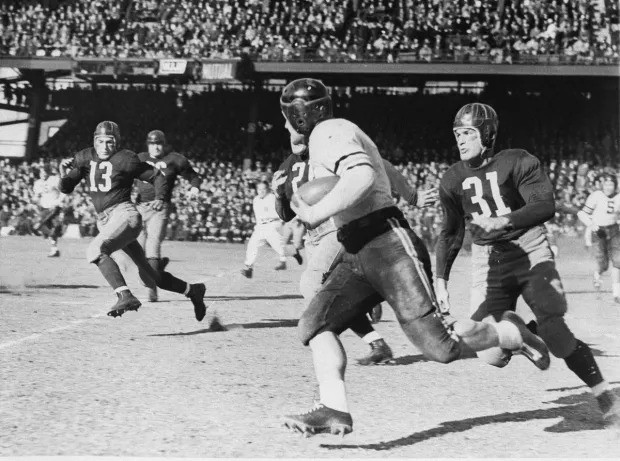
Biggest Blowout in NFL History (73–0 Shock)
The biggest blowout in NFL history wasn’t 59–0. It was worse. See how a 73–0 championship game still shocks fans 80+ years later.

CFL American Teams: The 1990s U.S. Expansion Story
A U.S. team once won the Grey Cup. Relive the full CFL American teams era — the cities, the drama, and why the experiment collapsed.

Steelers Super Bowl Wins: A Complete History of Pittsburgh’s Championship Glory
How many Super Bowls have the Steelers really won? Relive all 6 titles, the 1970s dynasty, and the toe-tap catch that changed history.