
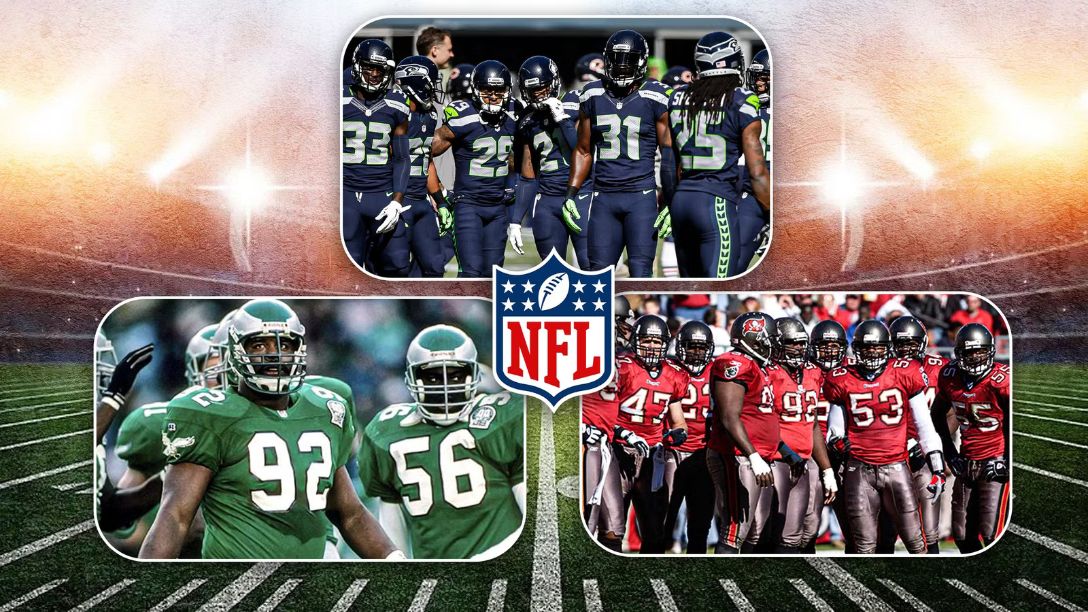
Greatest NFL Defenses of All Time
Ask any true NFL fan and they’ll tell you: offense sells tickets, but defense wins championships. Over the decades, some teams didn’t just play good defense — they controlled games. They shut down Hall of Fame quarterbacks. They turned playoff games into rock fights. They made coordinators lose sleep.
When we talk about the greatest NFL defenses of all time, we’re not just listing teams with low points allowed. We’re looking at dominance. Fear. Scheme innovation. Playoff impact. Legacy.
Some of these units carried average offenses to Super Bowl wins. Others changed how football is coached. A few forced rule adjustments because they were simply too physical or too fast.
In this deep dive, we’ll break down:
– What defines true defensive greatness
– The most dominant single-season defenses
– Legendary schemes that shaped the NFL
– The players who made it all work
– And how today’s defenses compare
Let’s get into it.
What Defines a Truly Great NFL Defense?
Before ranking the greatest NFL defenses of all time, we need clear criteria.
1. Points Allowed (PPG)
The simplest metric: how many points did they give up?
The 2000 Ravens allowed 10.3 points per game. That’s absurd in any era.
2. Takeaways & Turnovers
Great defenses don’t just stop drives — they steal possessions. Forced fumbles, interceptions, defensive touchdowns. Field position wins games.
3. Playoff Dominance
Regular season stats are nice. But legends are made in January. Some defenses elevated their level when everything mattered most.
4. Scheme Innovation
Did they change the game? The 46 defense. The Tampa 2. Seattle’s Cover 3 variations. These weren’t just systems — they became templates.
5. Era Context
A 1970s defense played under different rules than a 2010s unit. Comparing across eras means adjusting for offensive explosion trends.
One thing many ranking pages miss? Leadership. Communication. Swagger. The best defenses had identity. They knew who they were.
2000 Baltimore Ravens — The Standard
If you search any list of the greatest NFL defenses of all time, this team is almost always #1.
Why?
– Allowed 165 total points (fewest in 16-game season at the time)
– Just 10.3 PPG
– Four playoff games, only 23 total points allowed
– Super Bowl XXXV champions
Led by Ray Lewis and veterans like Rod Woodson, this unit didn’t just bend — it snapped offenses in half.
During a five-game stretch, the offense failed to score a touchdown. The defense still went 2-3. That tells you everything.
What made them special wasn’t just talent. It was situational mastery. Third down? Locked. Red zone? Almost automatic stop. They controlled pace — a forgotten skill in modern analytics discussions.
1985 Chicago Bears — The 46 Revolution
When fans talk about intimidating defenses, they picture the ’85 Bears.
– Allowed 12.4 PPG
– Outscored playoff opponents 91–10
– Super Bowl XX champions
Defensive coordinator Buddy Ryan introduced the aggressive 46 defense. It overloaded the line, blitzed relentlessly, and dared quarterbacks to survive.
Players like Mike Singletary and Richard Dent thrived in it.
What’s often overlooked:
They didn’t just pressure — they disguised pressure. Offenses didn’t know where heat was coming from.
1971 Minnesota Vikings — Purple People Eaters
Nicknamed the Purple People Eaters, this front four dominated with raw pass rush.
– Allowed 9.9 PPG
– Led league in sacks (unofficial stats era)
– Elite defensive line consistency
They didn’t rely on blitzing. They trusted the front four.
Why they matter:
They proved you can dominate without constant scheme complexity. Win with fundamentals.
2002 Tampa Bay Buccaneers — Tampa 2 Perfection
The Tampa 2 wasn’t invented here — but it was perfected.
– Allowed 12.3 PPG
– 31 interceptions
– Defensive touchdowns galore
– Super Bowl XXXVII champions
Led by Derrick Brooks and Warren Sapp.
They combined speed with discipline. Zone coverage forced mistakes. Safeties closed gaps fast.
Different perspective:
This defense thrived because it fit the era. Quarterbacks were transitioning into more vertical attacks — Tampa’s zone spacing countered it perfectly.
2013 Seattle Seahawks — Legion of Boom
Modern era dominance is harder. Rules favor offense.
Yet this unit:
– Allowed 14.4 PPG
– Led league in scoring defense, pass defense, and turnovers
– Crushed the Broncos in Super Bowl XLVIII
The secondary — including Richard Sherman and Earl Thomas — redefined physical coverage.
They jammed receivers legally within rule limits. They hit hard. They communicated.
Unique Insight:
They’re arguably the most complete defense of the pass-heavy era.
Other Legendary Defensive Units
Some lists ignore these — but they belong in any serious discussion of the greatest NFL defenses of all time.
1978 Pittsburgh Steelers — Steel Curtain
1991 Philadelphia Eagles — Gang Green
1967 Los Angeles Rams — Fearsome Foursome
1977 Atlanta Falcons — Grits Blitz
Each had statistical dominance within their era.
How Defensive Schemes Shaped NFL History
The evolution matters.
– 4-3 base fronts dominated early
– The 46 overloaded the line
– Tampa 2 emphasized zone drops
– Modern Cover 3 blends speed and disguise
Defenses adapt because offenses evolve. Rule changes (illegal contact emphasis, QB protection) forced schematic creativity.
Statistical Metrics That Matter
When evaluating the greatest NFL defenses of all time, modern analytics include:
– Defensive DVOA
– EPA per play allowed
– Red zone percentage
– Turnover differential
Old-school fans prefer raw toughness. New-school fans prefer efficiency metrics. Truth is, both matter.
Conclusion
The debate about the greatest NFL defenses of all time will never end. And that’s a good thing.
Football changes. Rules shift. Offenses evolve. But elite defense remains constant. Whether it was the 1970s trench wars or the modern spread era, dominant units always found a way to impose their will.
The common thread? Identity. Leadership. Discipline. And stars who showed up in January.
So here’s the real question:
If you had to win one game — any era — which defense are you choosing?
Let me know your pick. I’m curious.
FAQs
What is considered the strongest defense in NFL history?
Most analysts point to the 2000 Ravens due to record-low points allowed and playoff dominance.
Which NFL defense allowed the fewest points in a season?
The 1977 Falcons allowed 129 points in a 14-game season, one of the lowest totals ever.
Did the 1985 Bears have the best defensive scheme?
The 46 defense was revolutionary and heavily influenced future aggressive fronts.
Are modern defenses worse than older ones?
Not worse — they play under stricter rules favoring offenses.
What metrics define defensive greatness today?
DVOA, EPA per play, turnover margin, and red zone efficiency are key advanced stats.
Don’t Miss These
Teams That Have Never Won a Super Bowl (2026 Guide)
Which team will finally break the curse? Full list of teams that have never won a Super Bowl + predictions.

Wealthiest Owners in Sports: Billionaires Behind Teams
Meet the wealthiest owners in sports, from NBA tech billionaires to NFL retail dynasties. See who tops the list and how much they’re worth.
Roll Tide Meaning (Alabama Fans Guide) — What Roll Tide Really Means
What does “Roll Tide” really mean? The history, the pride, and why Alabama fans say it everywhere—not just on game day.
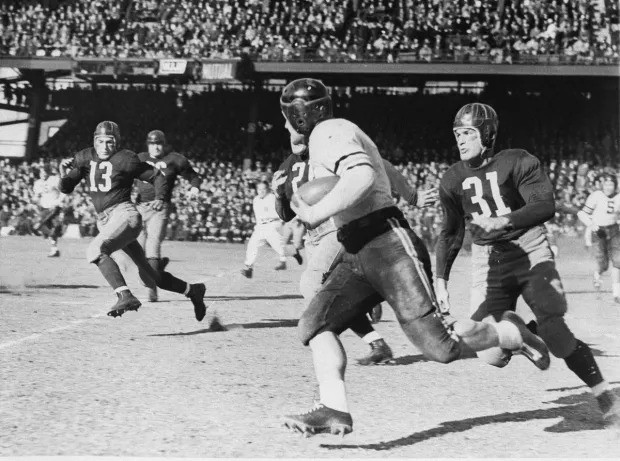
Biggest Blowout in NFL History (73–0 Shock)
The biggest blowout in NFL history wasn’t 59–0. It was worse. See how a 73–0 championship game still shocks fans 80+ years later.

CFL American Teams: The 1990s U.S. Expansion Story
A U.S. team once won the Grey Cup. Relive the full CFL American teams era — the cities, the drama, and why the experiment collapsed.

Steelers Super Bowl Wins: A Complete History of Pittsburgh’s Championship Glory
How many Super Bowls have the Steelers really won? Relive all 6 titles, the 1970s dynasty, and the toe-tap catch that changed history.