
Biggest NBA Stadium: The Largest NBA Arenas Ranked
If you’ve ever watched an NBA game on TV and heard the crowd explode after a game-winning shot, you’ve already felt the power of a packed arena. But some NBA venues take that energy to another level simply because of their size. When more than 20,000 fans fill the seats, the noise, atmosphere, and pressure on players become something special.
So what is the biggest NBA stadium today? And how do the league’s largest arenas compare when it comes to capacity, fan experience, and history?
The NBA currently has 30 teams playing in 29 arenas, each with its own design, capacity, and personality. The largest arenas can hold more than 20,000 fans for a basketball game, while the league average sits around 18,790 seats per venue.
In this guide, we’ll look at:
– The largest NBA arenas by seating capacity
– What makes certain stadiums feel bigger than others
– How arena size affects home-court advantage
– Famous moments that happened inside the league’s biggest venues
– What the future of NBA arenas might look like
If you love basketball and the energy of live games, this deep dive into the NBA’s biggest arenas will show why these venues matter just as much as the players on the court.
Largest NBA Arenas by Capacity
The Biggest NBA Stadium Today
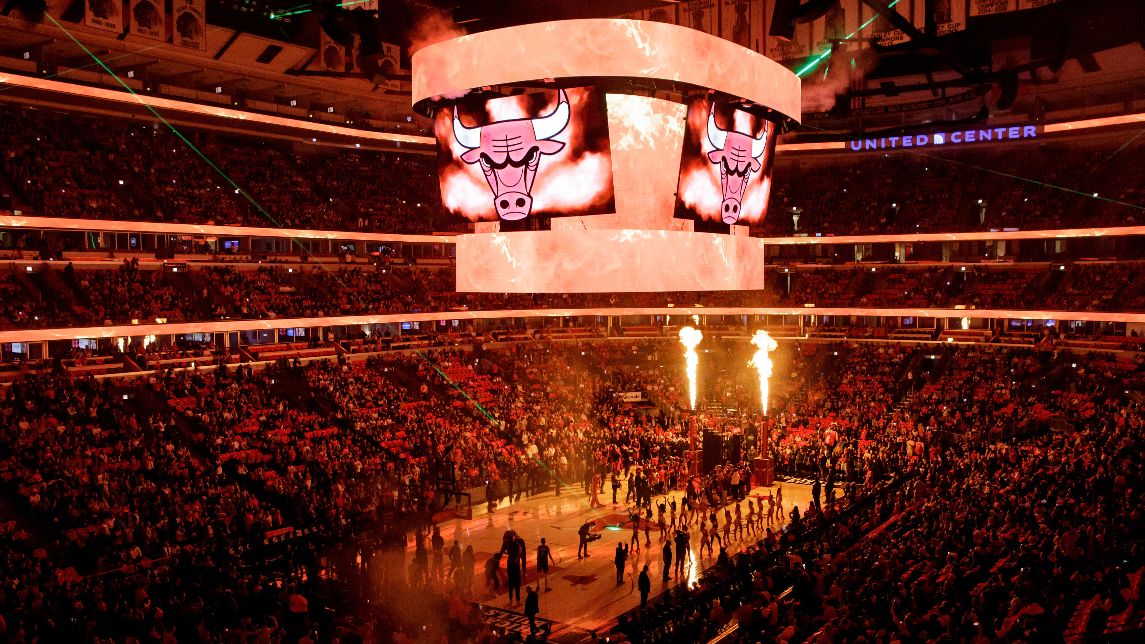
The current largest NBA arena is the United Center in Chicago, home of the Chicago Bulls.
United Center (Chicago Bulls)
– Location: Chicago, Illinois
– Opened: 1994
– Basketball capacity: 20,917 seats
– Maximum with standing room: over 23,000
The United Center has been the largest NBA arena for years. It replaced the old Chicago Stadium and quickly became known as “The House That Jordan Built.”
During the 1990s, when Michael Jordan and the Bulls dominated the league, this arena hosted some of the loudest crowds in basketball history.
Even today, Bulls games draw huge crowds, and the venue remains one of the most recognizable arenas in sports.
Why it feels massive
The United Center was designed with:
– Wide concourses
– Multiple seating levels
– Huge video boards
– Over 960,000 square feet of space
All of that creates a venue that feels more like a sports complex than a typical arena.
Top 10 Biggest NBA Arenas
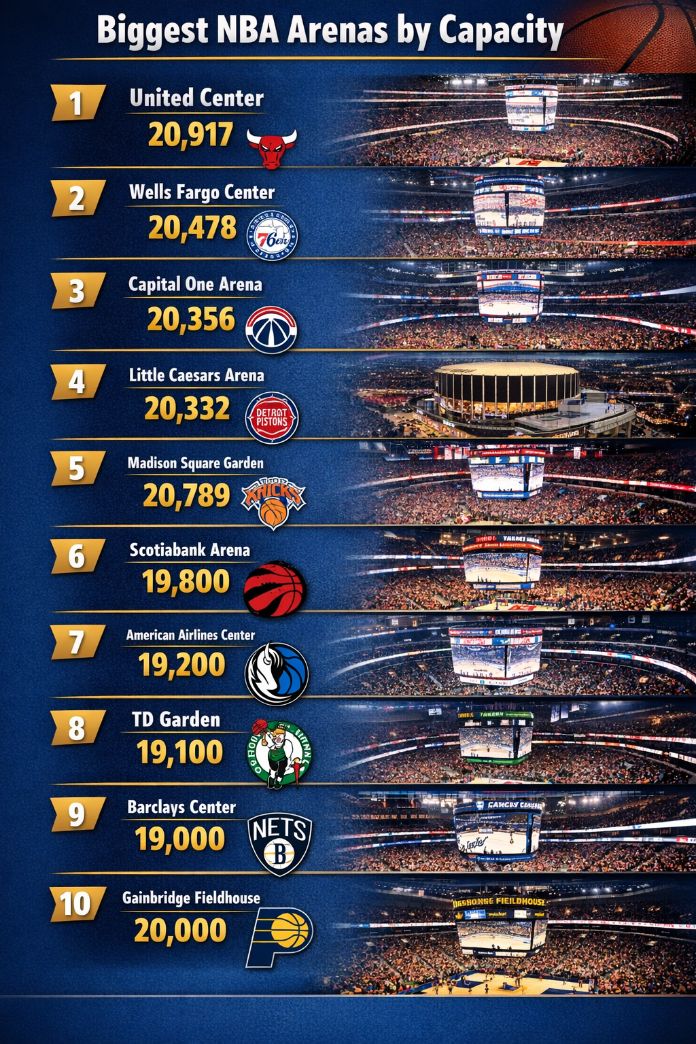
Here are the largest NBA arenas ranked by seating capacity.
– United Center, Chicago Bulls – 20,917 seats
– Wells Fargo Center, Philadelphia 76ers – 20,478 seats
– Capital One Arena, Washington Wizards – 20,356 seats
– Little Caesars Arena, Detroit Pistons – 20,332 seats
– Madison Square Garden, New York Knicks – 20,789 seats
– Scotiabank Arena, Toronto Raptors – 19,800 seats
– American Airlines Center, Dallas Mavericks – 19,200 seats
– TD Garden, Boston Celtics – 19,100 seats
– Barclays Center, Brooklyn Nets – 19,000 seats
– Gainbridge Fieldhouse, Indiana Pacers – 20,000 seats
Several arenas in the league now cross the 20,000-seat mark, which shows how the NBA has grown as a global sport.
Some of these arenas also host:
– NHL games
– Concerts
– UFC events
– College basketball
So their design has to balance multiple sports and large audiences.
Why Arena Size Matters in the NBA
Arena size isn’t just a number on paper. It changes the experience for fans and players.
1. Home-court advantage
A packed arena can swing momentum.
When 20,000 fans are screaming, communication becomes harder for the opposing team.
Players often say the loudest arenas can:
– disrupt offensive plays
– pressure referees
– boost energy for home teams
2. Revenue and team value
Bigger arenas also mean more revenue through:
– ticket sales
– suites
– premium seating
– concessions
With the NBA growing globally, attendance numbers have surged. In the 2023–24 season the league set an all-time attendance record with more than 22.5 million fans, and arenas averaged 98% capacity.
3. Fan experience
Modern arenas focus on more than just seats.
They include:
– giant HD scoreboards
– fan lounges
– luxury suites
– interactive experiences
Some stadiums now feel closer to entertainment districts than sports venues.
Beyond the crowd noise and ticket sales, arena size also changes how fans experience the physical side of basketball. Watching the game live gives a better sense of the scale of the athletes on the floor—from a tallest basketball player battling near the rim to guards sprinting across the court in transition. The closer you are to the action, the easier it is to appreciate just how big and fast NBA players really are.
Historic Moments in the NBA’s Biggest Arenas
Large arenas often host the league’s most iconic moments.
United Center
Some unforgettable events here include:
– Michael Jordan’s championship runs
– Derrick Rose’s MVP season
– record-breaking playoff crowds
The building also hosted NHL championships and global concerts, showing how versatile these venues can be.
Madison Square Garden
Known as “The Mecca of Basketball,” MSG has hosted:
– legendary Knicks playoff runs
– college basketball tournaments
– international games
Despite newer arenas, MSG remains one of the most famous basketball venues in the world.
Wells Fargo Center
Home to the Philadelphia 76ers, the arena is known for:
– intense playoff crowds
– passionate fan culture
– one of the loudest atmospheres in the NBA.
Some of the most exciting moments in these arenas come from explosive plays above the rim. Fans inside the building often react louder to dunks because the athleticism feels even more dramatic in person. Seeing one of the highest vertical jump NBA players elevate for a dunk or block can instantly energize a crowd of twenty thousand people.
The Evolution of NBA Arenas
NBA arenas have changed a lot over the decades.
Early arenas
In the 1950s and 60s:
– arenas were smaller
– fewer luxury suites existed
– amenities were basic
Most venues focused only on the game.
1990s arena boom
The NBA’s popularity exploded in the 90s.
Teams built bigger venues with:
– modern scoreboards
– corporate boxes
– better seating layouts
The United Center is a perfect example of this era.
Modern arenas
Today’s arenas focus on technology and entertainment.
New features include:
– giant center-hung scoreboards
– immersive lighting
– mobile ordering for food
– premium VIP sections
New venues like the Intuit Dome (Clippers) push this even further with smart-arena technology.
Biggest NBA Stadium vs Other Basketball Arenas
Even the largest NBA arenas are smaller than some college basketball venues.
For example:
– College arenas like Syracuse’s dome can host 30,000+ fans
– NBA arenas prioritize comfort and premium seating
That’s why the typical NBA venue stays around 18,000–20,000 seats.
The goal isn’t just capacity — it’s revenue and fan experience.
What Makes an NBA Arena Great
Capacity matters, but fans usually judge arenas by other factors.
Atmosphere
Some smaller arenas feel louder because the seats are closer to the court.
Location
Urban arenas like MSG or Capital One Arena sit right in city centers.
That means:
– restaurants nearby
– public transit access
– strong game-day culture
Technology
Modern arenas use:
– 360-degree video boards
– LED lighting shows
– mobile apps for fans
These upgrades make games feel more like events.
Seating layout also affects how clearly fans can see different roles on the court. In lower bowl seats, you can easily follow the movement of players on the perimeter, especially those playing the shooting guard position, who often rely on quick cuts, perimeter shooting, and defensive pressure.
Future NBA Arenas
The NBA continues to invest in new arenas.
Several new projects are already planned.
Examples include:
– New Oklahoma City arena (expected later this decade)
– New arenas proposed for Philadelphia and Dallas.
These venues will likely focus on:
– smart technology
– immersive fan experiences
– entertainment districts around arenas
So the biggest NBA stadium of the future may look very different from today’s venues.
Conclusion
The biggest NBA stadiums are more than just big buildings. They’re the stage where some of basketball’s greatest moments happen.
From Chicago’s United Center to New York’s Madison Square Garden, these arenas hold thousands of fans who bring the game to life. Every cheer, chant, and buzzer-beater echoes through these massive venues.
While the United Center currently holds the title of largest NBA arena, the future of basketball venues is likely to focus less on capacity and more on experience. Technology, luxury seating, and entertainment districts are shaping the next generation of NBA arenas.
For fans, though, one thing stays the same.
When 20,000 people stand up after a game-winning shot, the arena feels bigger than any number on a capacity chart.
And that’s what makes NBA arenas special.
What is the biggest NBA stadium?
The United Center in Chicago is the largest NBA arena, with a basketball seating capacity of 20,917 fans.
Which NBA arena is the oldest?
Madison Square Garden opened in 1968, making it the oldest arena still used by an NBA team.
What is the average NBA arena capacity?
The average NBA arena holds about 18,790 fans for basketball games.
Which NBA arenas hold over 20,000 fans?
Examples include:
– United Center
– Wells Fargo Center
– Capital One Arena
– Little Caesars Arena
Why don’t NBA arenas hold more people?
Teams focus on premium seating and fan comfort, which often generates more revenue than simply increasing capacity.
Reader Feedback
Did your favorite NBA arena make the list?
And here’s a question for you:
Which arena has the best atmosphere in the NBA — Chicago, New York, Boston, or somewhere else?
Share your pick and send this article to a friend who loves basketball.